From the agency
From manual process to automated software
TL;DR – the short version: Manual processes are rarely a problem while the business stays small. Past a certain point, they cost more in time, errors and frustration than they save. This post shows how to spot that point, why off-the-shelf software and no-code tools are often only half the answer, and what the path to your own software looks like in four steps – from prototype to AI integration.
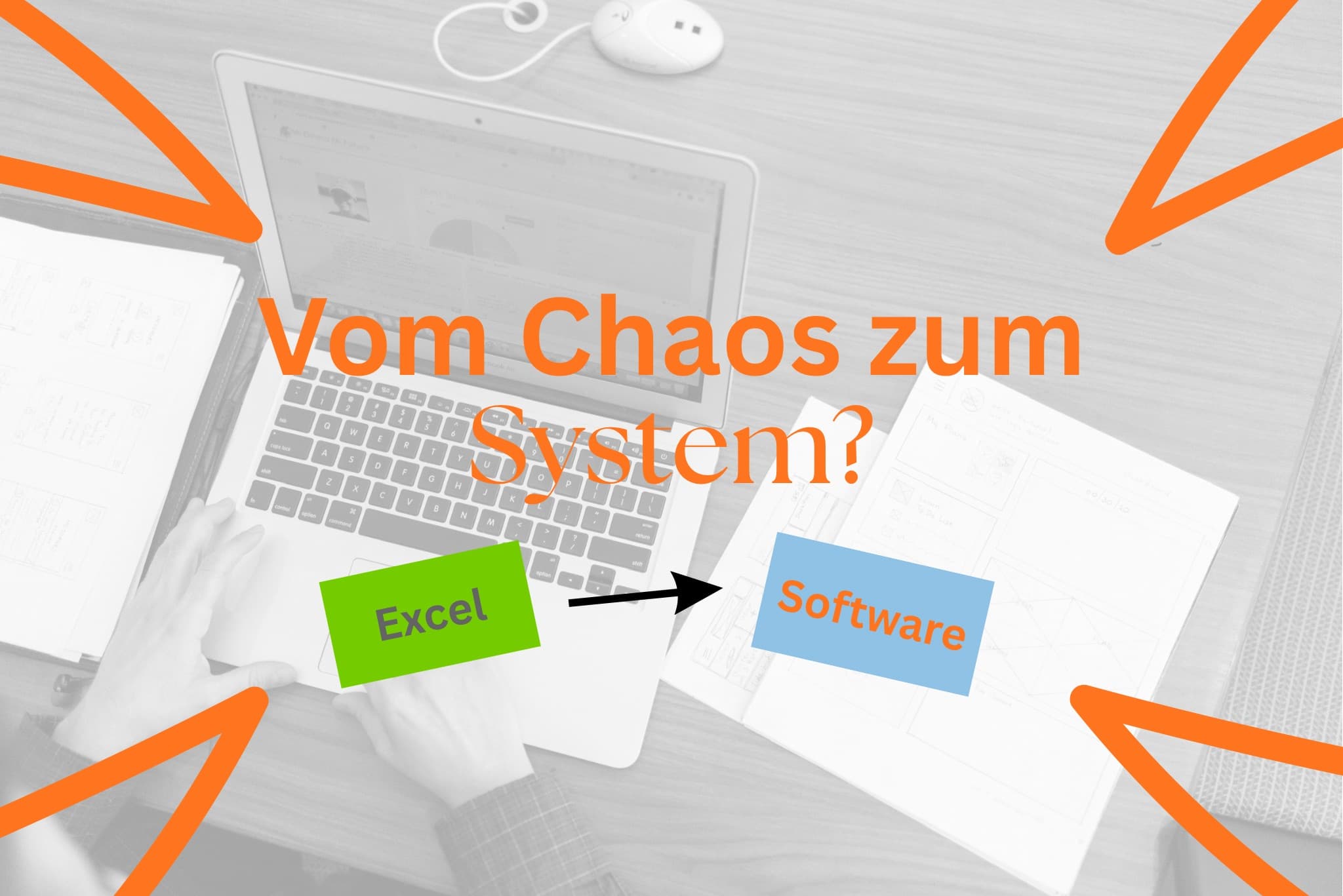
Almost every company has them: workflows that ‘have always been done this way’. The Excel sheet that gets emailed round every Monday. The order that gets retyped three times before it reaches accounts. The approval that sits on the desk of a colleague who happens to be on holiday.
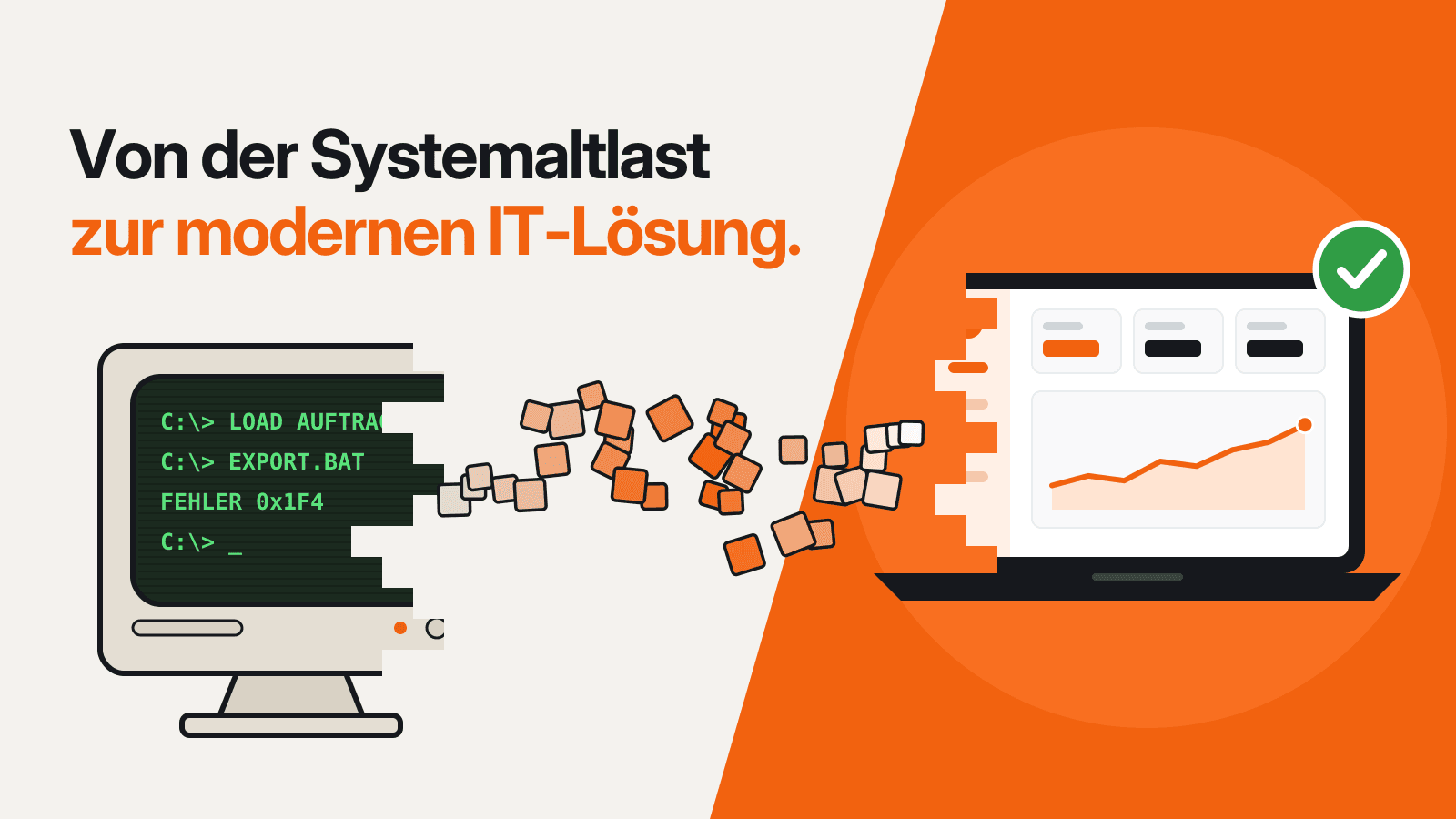
Processes like these work – until they don't. At some point the team grows, volumes go up, a new hire doesn't know the unwritten rules, and suddenly the workflow costs more than it delivers. That's exactly what we're here for: fewer clicks, less Excel, more getting things done. In this post, we show you how to tell when a process is ready for software, what your options are and what the path to your own solution looks like with us.
Still running – or just about limping along? Four warning signs
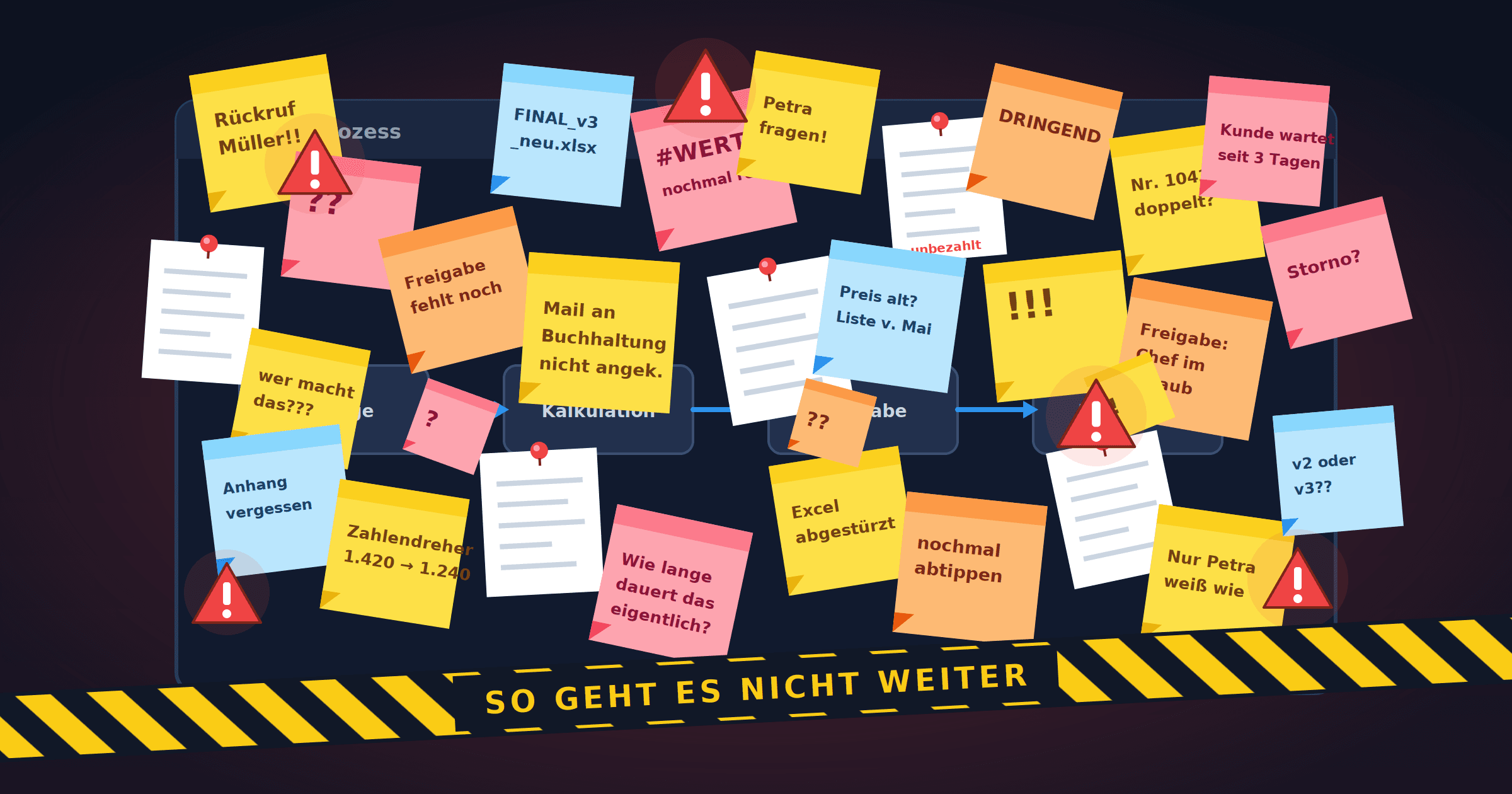
Every business starts from a different place, but the warning signs are usually the same:
The effort lies between the steps. The actual task is done quickly – what takes time is the handover: data gets copied between systems, tasks wait for approval, coordination happens over email.
Errors keep cropping up in the same places. Transposed digits, outdated file versions, forgotten attachments. When people repeat the same steps hundreds of times, errors aren't a question of diligence but of statistics.
The workflow depends on individual people. If only one person knows how the costing spreadsheet is built or which order the steps go in, every absence becomes a business risk.
There are no reliable figures. How long does a quote take on average? How many tasks get left lying around? Without digital records, you can only guess – and without figures, you can't improve a process in any targeted way.
If two of these apply, a structured analysis is worth it.
More people, more tools or your own software? The options compared
More staff eases the bottleneck in the short term – the process stays the same, just with higher fixed costs.
Off-the-shelf software is the right choice for accounting, time tracking or email. For the processes that set your business apart – costing, order management, coordination between departments – it rarely fits. We hear the result in almost every first conversation: three tools, Excel in between, and one person holding it all together by hand.
No-code platforms work for simple, linear workflows. Once real business logic, integration with existing systems or growing data volumes come into play, things get sluggish – and licence costs rise with every user, while switching becomes almost impossible.
Custom software maps the process the way it actually works. Getting started takes more effort, but the solution grows with your business, connects to your existing systems and can run on your own servers if you want.
At trefox, the rule is: the code belongs to you, with no lock-in. We replace legacy systems and Excel solutions step by step while your business keeps running. And we build with as few tools from outside the EU as possible.
How do you get from an Excel sheet to your own software – without stopping the business?
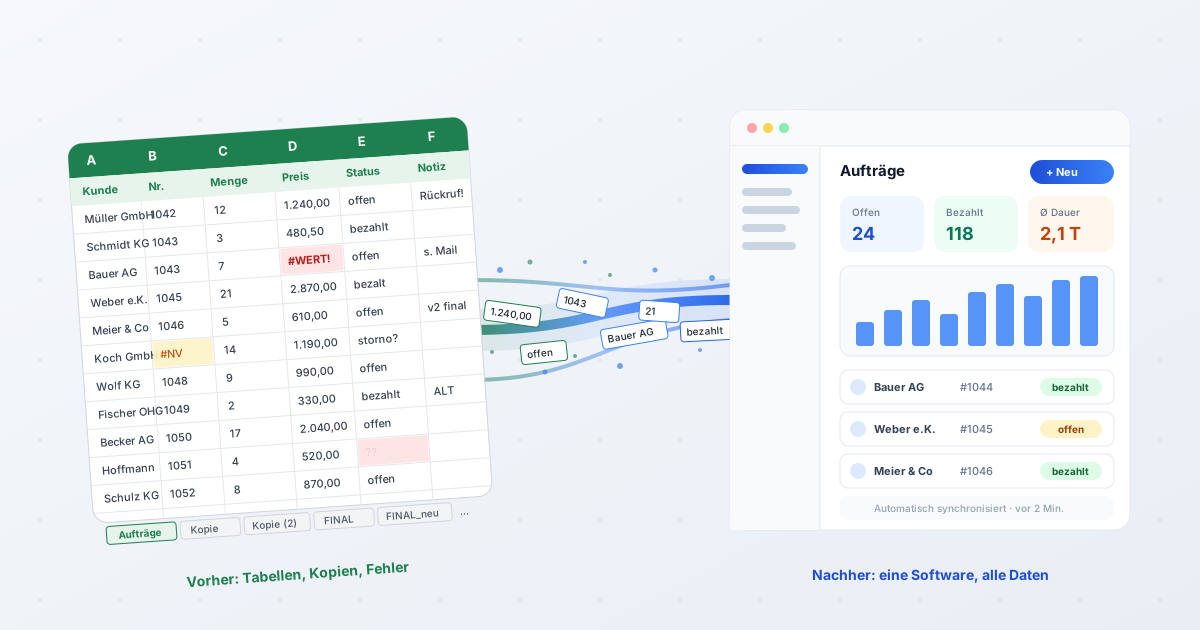
A software project at trefox runs in four phases. Your business keeps running the whole time.
1. Requirements analysis: understand first, then build
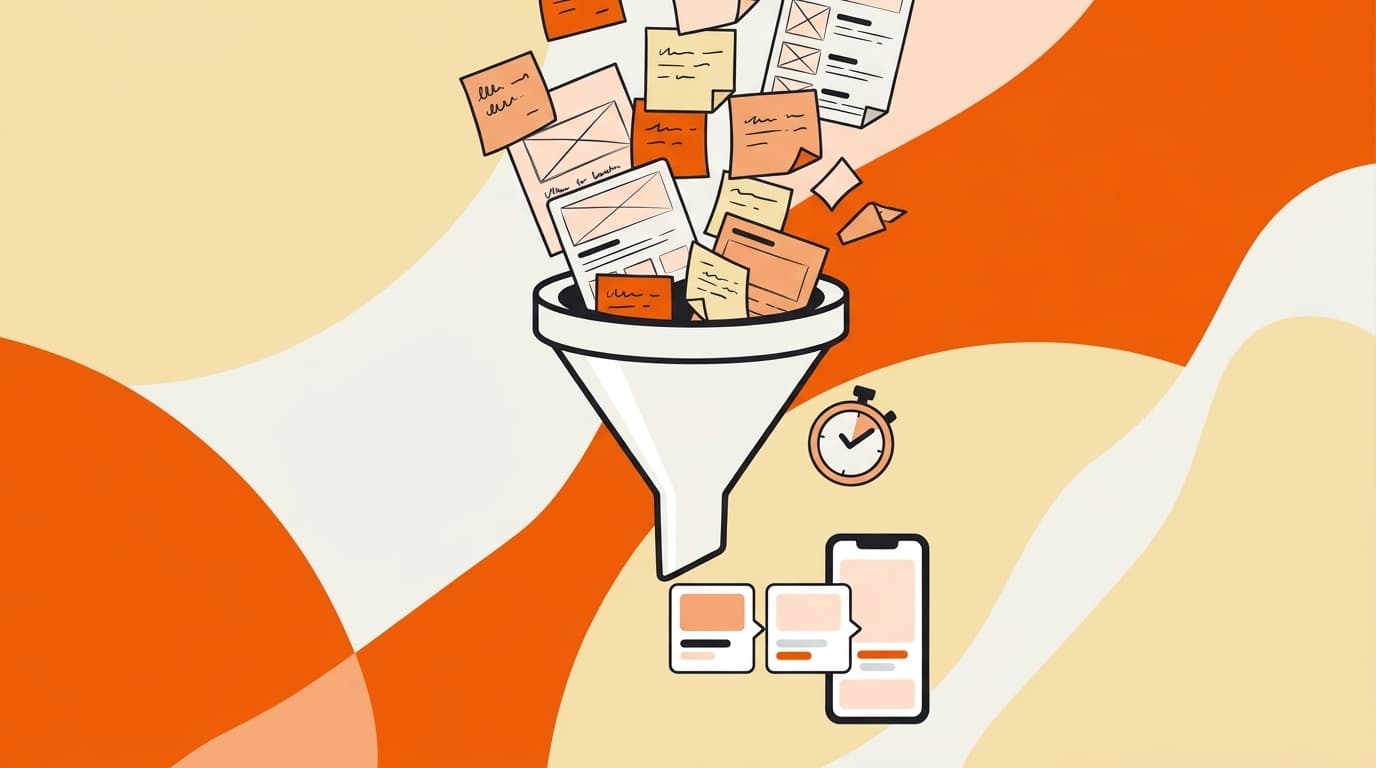
Before we write any code, we look at the workflow as it really runs – with the people who do it every day, including the exceptions and Excel tricks nobody has ever written down. The result is a clear list: what the software must do, what's nice to have, and what can be dropped altogether.
2. Iterative sprints: something tangible every few weeks
We build in short stages of two to three weeks. At the end of each stage, there's something clickable for you to try out. That way, you know within weeks whether we're heading in the right direction – not months. Anything that doesn't fit gets adjusted in the next stage.
3. Clear milestones: you always know where the project stands
The stages work towards fixed, dated milestones, such as ‘Quotes can be created’ or ‘The old Excel sheet is no longer needed’. That makes effort and costs predictable – and old programs are replaced step by step rather than switched off on a single cut-over date.
4. Handover and support: the software is yours
At the end, you get the complete source code. You can carry on with us or without us – no strings attached. Most clients stay: we support the software after go-live and extend it as your business needs. Often that's when the next step comes: where someone used to sort documents or draft quotes, an AI integration takes over the job – if you like, set up so that no data leaves the EU.
What this means in practice: minutes instead of hours, one system instead of five
Quotes in minutes instead of hours. For a solar provider, we built an application that lets sales staff create quotes on site with the customer. Roof layouts are calculated mathematically, and panel orientation is optimised using solar irradiance data. A costing process that used to take hours by hand now takes a few minutes and delivers reproducible results. Project duration: six months.
One complete system instead of isolated tools. An auditor was working with several separate tools and a lot of manual reconciliation. Today, quotes, orders, contact management and project management all run in one system that mirrors their processes exactly and runs on their own servers. Built over 24 months – step by step, while the business kept running.

Our take: automation isn't an end in itself
The value of a software solution isn't that a process is digital, but whether it becomes faster, more reliable and more transparent – and whether your team can spend its time on the work that moves the business forward again.
The crucial step is the first one: analysing the process honestly and choosing the right approach. Sometimes an off-the-shelf tool is enough; sometimes you need a custom solution. If you'd like to work that out with us, book a no-obligation initial call – or get a first draft quote on our website in a few seconds.
FAQs: from manual process to automated software
When is custom software worth it?
When a process regularly costs time, causes errors or is only really mastered by one person – and no ready-made program handles it properly. We can usually work that out in the first conversation.
Do we have to switch everything over at once?
No. We start with the part that makes the biggest difference. Your existing tools keep running until the new solution replaces them.
How soon will we have something to work with?
After the requirements analysis, you get something to try out every few weeks, with a first usable version after just a few weeks.
What happens to our existing data and systems?
We bring them along. Existing programs are either integrated or gradually replaced.
Will we own the software at the end?
Yes, completely – including the source code. You can keep working with it, with or without us.
Michael Reich
Founder & Developer
Michael has been building custom software for more than ten years. At trefox, he guides projects from the first prototype through to live operation.